


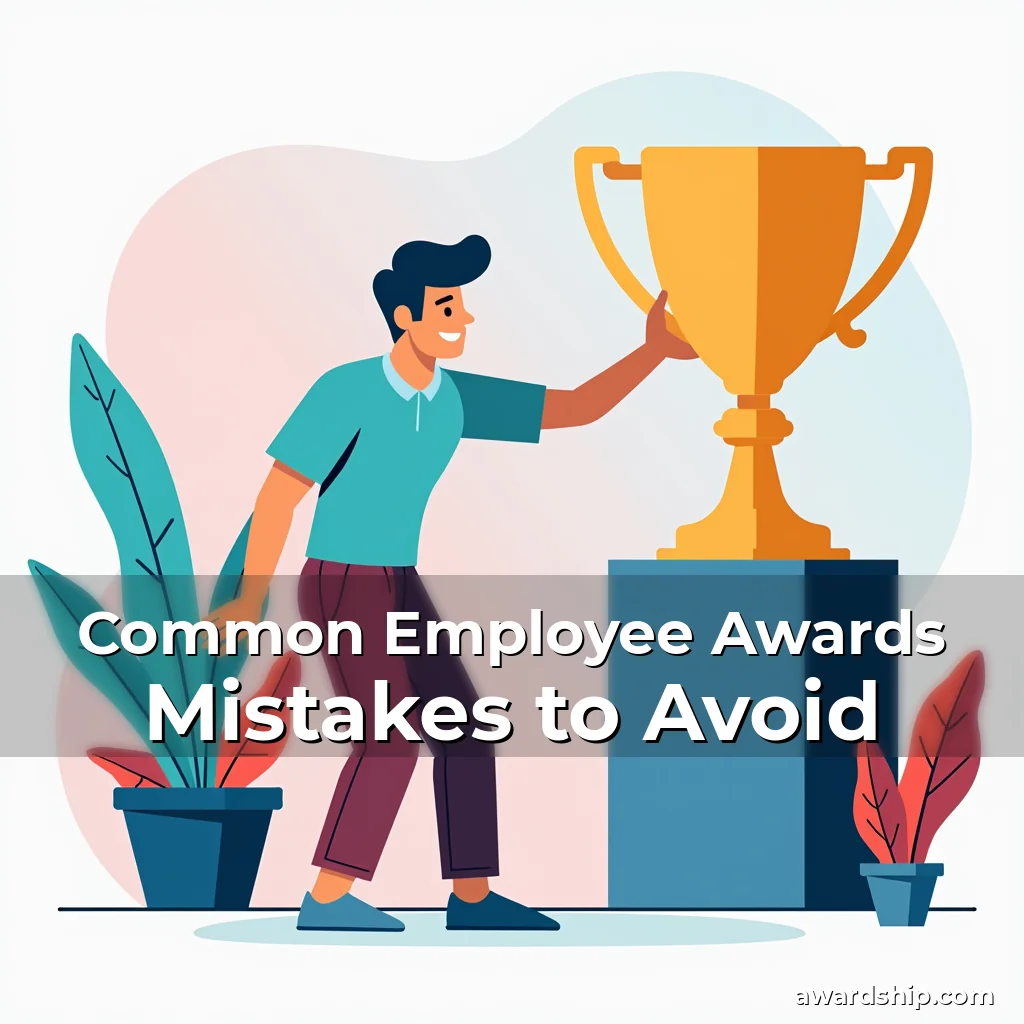
The Hidden Pitfalls of Overlooking Employee Recognition Programs
In today’s competitive business landscape, employee recognition has become an essential tool for retaining top talent and fostering workplace morale. However, many organizations still fail to implement effective programs that truly motivate their workforce.
This article explores common mistakes companies make when designing and executing employee award systems, revealing how these oversights can undermine team cohesion and productivity across industries.
Misunderstanding Core Motivational Drivers
A primary mistake is assuming all employees are motivated by the same factors. In reality, individual preferences vary widely between generations, roles, and personal goals.
For example, younger professionals often prioritize professional development opportunities over financial incentives, while experienced workers may value public acknowledgment more than material rewards.
- Generational differences: Millennials seek growth opportunities; Gen X values work-life balance
- Role-specific needs: Sales teams respond well to performance-based bonuses; creatives appreciate peer recognition
Failing to account for these variations leads to recognition programs that feel impersonal and ineffective to key personnel groups.
Research from Gallup shows only 29% of employees believe their organization recognizes them effectively, highlighting widespread program shortcomings.
Lack of Clear Criteria and Transparency
Vague award criteria create confusion and breed resentment among staff members who perceive the system as arbitrary or biased.
When employees don’t understand what behaviors will be recognized, they lose motivation to perform at higher levels knowing their efforts might go unnoticed.
Clear communication of evaluation standards ensures fairness and encourages healthy competition based on measurable achievements.
An HR survey found that 68% of employees would be more engaged if they understood exactly how recognition decisions were made.
Overreliance on Monetary Rewards
While cash bonuses have their place, relying too heavily on monetary compensation can backfire in several ways.
Financial rewards may not address deeper motivational needs related to career progression, belongingness, or purpose-driven work.
Excessive focus on money can also foster unhealthy competition where collaboration suffers due to perceived threats to individual rewards.
Studies show non-monetary recognition yields 4 times greater impact on long-term engagement compared to purely financial incentives.
Ignoring Cultural Contexts and Diversity
Employee award programs must consider cultural backgrounds that influence perceptions of recognition and achievement.
Certain cultures emphasize collective success over individual accomplishments, making solo awards potentially demotivating for some employees.
Diversity-focused recognition initiatives ensure inclusivity without singling out individuals against group norms.
A global study revealed 43% of multicultural workplaces reported improved retention after adjusting award practices to reflect diverse values.
Failure to Align Awards with Organizational Goals
Many recognition programs operate in isolation from broader company objectives, leading to misaligned priorities and wasted resources.
Effective awards should reinforce strategic goals such as innovation, customer satisfaction, or operational excellence.
Aligning recognition with business outcomes creates direct links between employee behavior and organizational success.
Companies that integrate awards with KPI tracking see up to 35% faster goal attainment according to McKinsey research.
Underutilizing Peer-to-Peer Recognition Systems
Traditional hierarchical award structures limit recognition to management discretion, missing opportunities for authentic colleague appreciation.
Peer recognition platforms allow real-time acknowledgment of impactful contributions happening daily within teams.
These systems promote a culture of continuous feedback and mutual support rather than waiting for annual reviews.
Organizations using peer recognition report 67% higher internal referrals and 28% better project completion rates.
Neglecting Continuous Improvement Mechanisms
Static award programs quickly become outdated as workplace dynamics evolve, but few companies regularly assess and update their systems.
Ongoing evaluation through employee surveys and performance data analysis identifies areas needing improvement.
Adaptive recognition frameworks remain relevant by incorporating new technologies and changing workforce expectations.
A benchmarking study showed companies conducting biannual reviews saw 52% fewer recognition-related complaints annually.
Poor Communication and Promotion Strategies
Even well-designed award programs fail when employees aren’t adequately informed about available options and participation processes.
Regular reminders, training sessions, and visible promotions help maintain awareness and engagement with the program.
Transparent communication builds trust in the system and reduces misunderstandings about eligibility requirements.
Businesses with robust promotion strategies experience 40% higher application rates for recognition programs.
Conclusion
Recognizing employees’ contributions is vital for maintaining high-performing teams, but it requires careful planning and ongoing refinement.
By avoiding these common pitfalls, organizations can create meaningful recognition experiences that drive both employee satisfaction and business results.
Implementing thoughtful, adaptable award systems positions companies to attract top talent and sustain competitive advantage in any market environment.
Start evaluating your current recognition strategy today and identify areas for improvement before the next performance cycle begins.


news is a contributor at AwardShip.com. We are committed to providing well-researched, accurate, and valuable content to our readers.
You May Also Like

Employee Awards vs Alternatives: Complete Comparison
Employee Awards vs Alternatives: Complete Comparison In today's competitive business landscape, recognizing employee achievements is crucial for fostering motivation, engagement,...

Mastering Employee Awards for Better Results
The Power of Recognition: How Employee Awards Transform Workplace Culture and Drive Organizational Success In today's competitive business landscape, recognizing...

Employee Awards on a Budget: Money-Saving Tips
Empowering Excellence: Creative Strategies for Recognizing Employee Achievements Without Breaking the Bank In today’s competitive workplace, recognizing employees’ contributions is...

Employee Awards for Small Spaces
The Power of Recognition: Crafting Meaningful Employee Award Programs In today's dynamic work environments, employee recognition has evolved from a...